
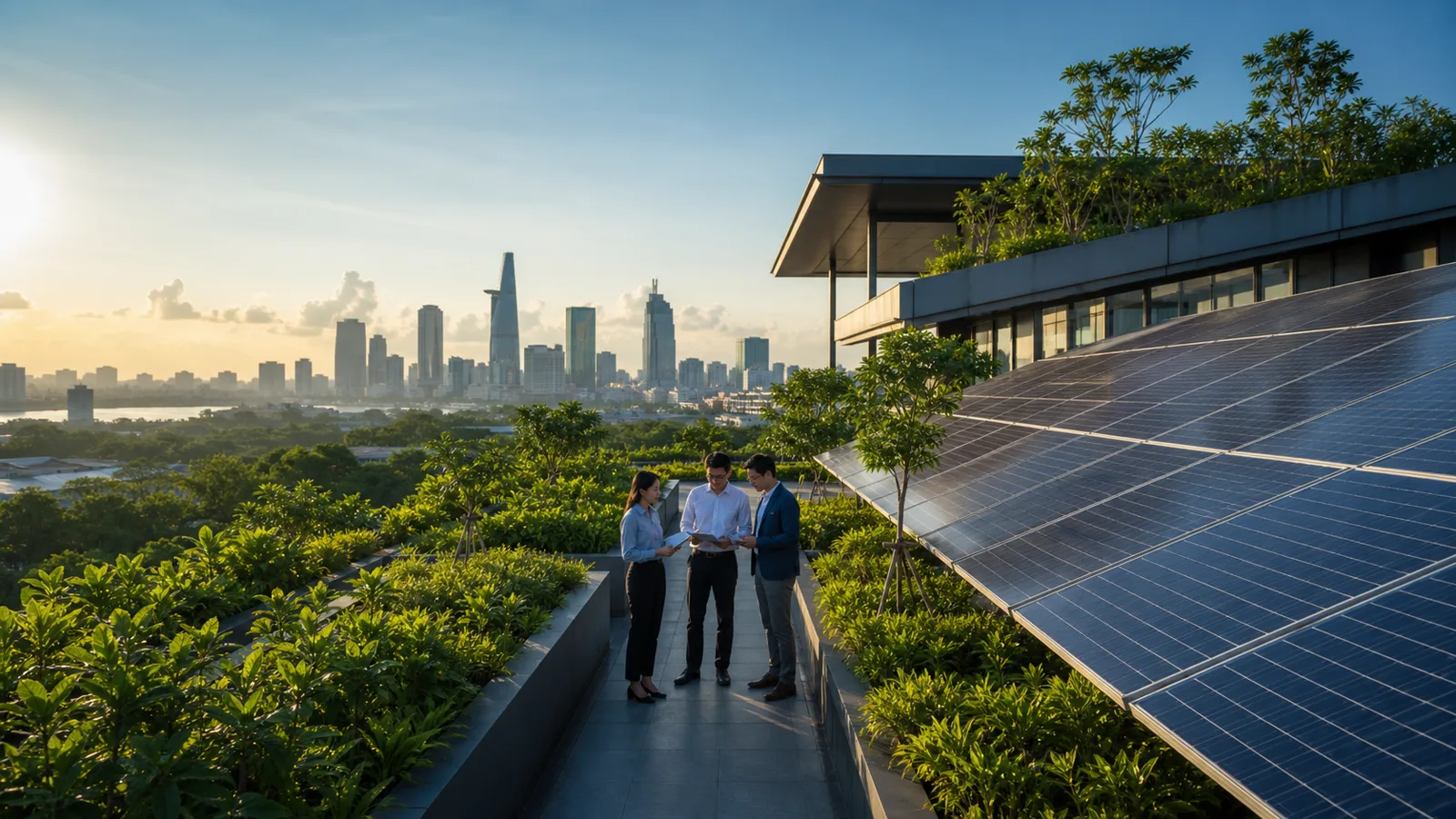
Vietnam has substantial demand for energy efficiency, industrial decarbonization, water management, climate-resilient agriculture, and sustainable urban infrastructure. That creates a compelling GreenTech market, but being “green” does not automatically make a venture investable. A startup must demonstrate economics, scalability, and measurable environmental impact at the same time.
GreenTech investors assess two value paths
A climate venture must create value for customers and impact for the environment. If customers buy only for a green message without an economic benefit, demand may not last. If the product saves money but impact cannot be measured, the venture may struggle to access climate-focused capital.
Economic value
- Lower energy, material, waste-treatment, or compliance costs.
- Improved productivity, reliability, traceability, or selling price.
- Faster payback and lower operating risk for customers.
Impact value
- Emissions avoided or removed using a consistent methodology.
- Energy, water, or materials saved per unit of output.
- Reuse, recycling, or asset-life extension rates.

Match the business model to the deployment cycle
GreenTech often involves hardware, certification, or long sales cycles. The revenue model should reflect how customers buy and who captures the savings.
| Model | Works well when | Evidence required |
|---|---|---|
| Equipment sale | The product is standardized and quick to install | Margin, warranty, and working capital |
| Subscription | Value comes from data and continuous optimization | Retention, service cost, and integration |
| Shared savings | Savings can be measured reliably | Baseline, payback, and performance risk |
| Project finance | Large assets generate long-term cash flows | Offtake contracts, capital structure, and delivery partners |
Build evidence before scaling
Investors want proof outside the laboratory. A strong pilot has a clear baseline, real operating conditions, success criteria, and an agreement covering data rights. Afterward, translate technical results into an economic case study.
Move from pilot to commercial contract
Before the pilot begins, agree on the next step if criteria are met: contract scope, budget, approver, and procurement timeline. Otherwise, a startup can become trapped in unpaid pilots that never generate revenue.
Measure impact in a verifiable way
Every impact metric needs a baseline, boundary, and assumptions. Do not multiply the best pilot result across the total market. Separate realized impact from potential impact and disclose factors that could change the outcome.
The credibility of an impact methodology matters as much as the size of the impact number.
Design the capital strategy around risk
Not every stage should be funded with equity. Grants can support research; strategic capital can unlock pilots; venture capital fits scalable models; debt and project finance become useful once asset cash flows are predictable.
Fundraising milestones
- Validate technical performance under real conditions.
- Prove customer willingness to pay and an acceptable payback period.
- Standardize deployment to reduce cost and time per project.
- Build an auditable impact-measurement system.
- Expand the pipeline through distribution and strategic partners.
The GreenTech fundraising narrative
A compelling pitch starts with the customer's economic problem, demonstrates why the technology solves it better, shows how the model scales, and presents climate impact as a measurable result of every unit of growth. When both value paths are clear, the startup is presenting more than a green story—it is presenting a business capable of durable profit and impact.